Inquiry
2026-10-09
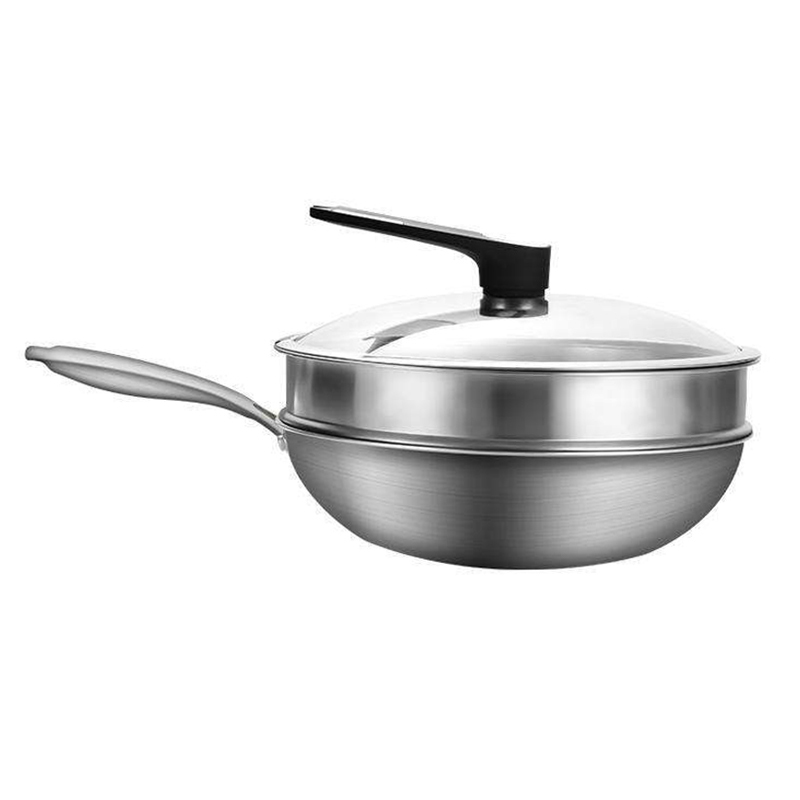
A sink full of dishes after dinner tends to make the dishwasher look like the obvious answer for everything, including the frying pan sitting on the stove with a bit of oil still clinging to its surface. Tossing it in with the rest of the load feels like the easy move, and for plenty of cookware, it genuinely is. Stainless steel nonstick frying pans sit in a slightly more complicated category, though, because the label on the box doesn't always tell the full story.
Some pans are marked dishwasher safe right on the packaging, which is accurate as far as it goes. That label usually means the pan won't be physically damaged by a single cycle. What it doesn't always communicate is how repeated dishwasher use, week after week, tends to affect the nonstick coating over the longer stretch of a pan's life.
The short version is that a stainless steel nonstick frying pan can technically survive a dishwasher cycle here and there, but making that the regular cleaning method tends to shorten how well the coating performs over time. A few reasons why come down to what actually happens inside a dishwasher during a normal cycle:
A nonstick coating is a thin layer bonded to the stainless steel body underneath, and that bond is what makes the pan release food easily in the first place. Dishwasher detergents are formulated to break down grease aggressively across an entire load of mixed dishes, which works well on ceramic plates and metal cutlery but can be a bit much for a delicate coated surface.
The combination of strong detergent, sustained heat, and water pressure from the spray arms creates conditions that gradually wear down the coating's surface at a microscopic level. It's not usually a dramatic failure after one wash. It's more of a slow fade, where the coating loses a bit of its effectiveness with each cycle until, after enough repetitions, food starts sticking in ways it never used to.
Physical contact adds another layer to the problem. Dishwashers pack plates, bowls, and utensils into a fairly tight space, and a frying pan sitting among them can get bumped or scraped during the wash and rinse cycles. Those small impacts, similar to what a metal utensil might cause during cooking, contribute to surface wear over time.
Using the dishwasher for a stainless steel nonstick frying pan once in a while, during a particularly busy week or after a large gathering, isn't likely to cause noticeable damage on its own. The concern is less about any single wash and more about what becomes the regular habit over months of use.
Think of it similarly to how sunlight affects fabric. One afternoon outside doesn't fade a shirt noticeably, but repeated exposure day after day eventually does. Dishwasher cycles work the same way on nonstick coatings, where the cumulative effect matters more than any individual instance.
A useful way to think about it:
| Washing Method | Effect on Coating | Best Used For |
|---|---|---|
| Hand washing regularly | Gentle, minimal wear over time | Everyday cleaning routine |
| Dishwasher occasionally | Some wear, generally manageable | Busy days or larger meal cleanups |
| Dishwasher as the main method | Noticeable wear over months | Not generally recommended long term |
Treating the dishwasher as a backup option rather than the default routine tends to strike a reasonable balance between convenience and keeping the coating in decent shape for longer.
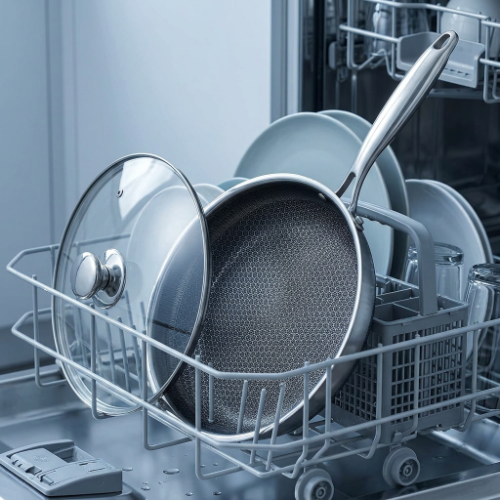
Not every stainless steel nonstick frying pan responds to dishwasher use the same way. Coating thickness, the bonding process used during manufacturing, and even the design of the handle all play a role in how well a specific pan tolerates machine washing.
A few things worth checking on any given pan:
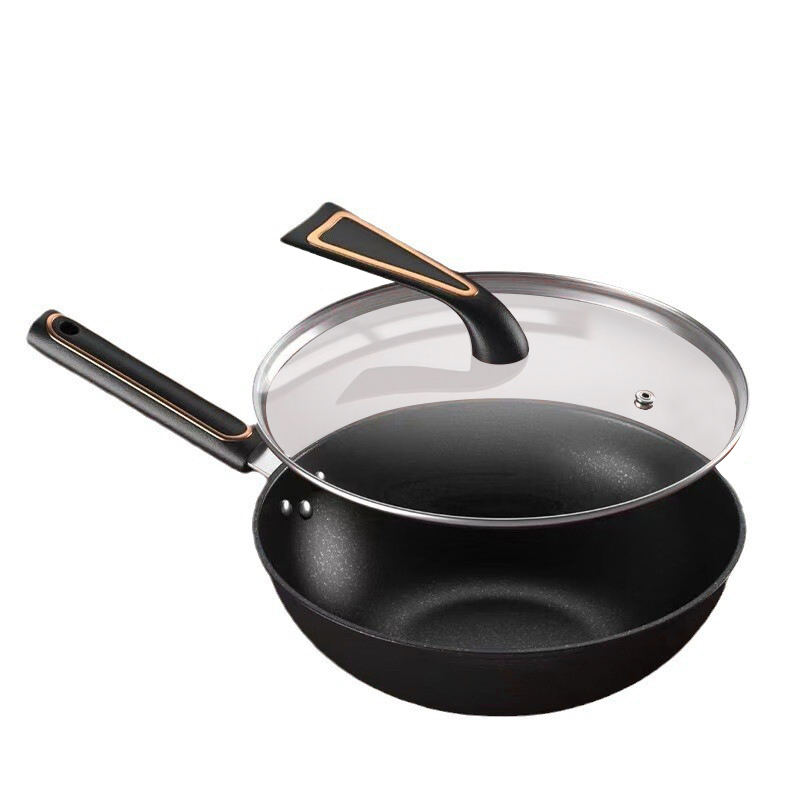
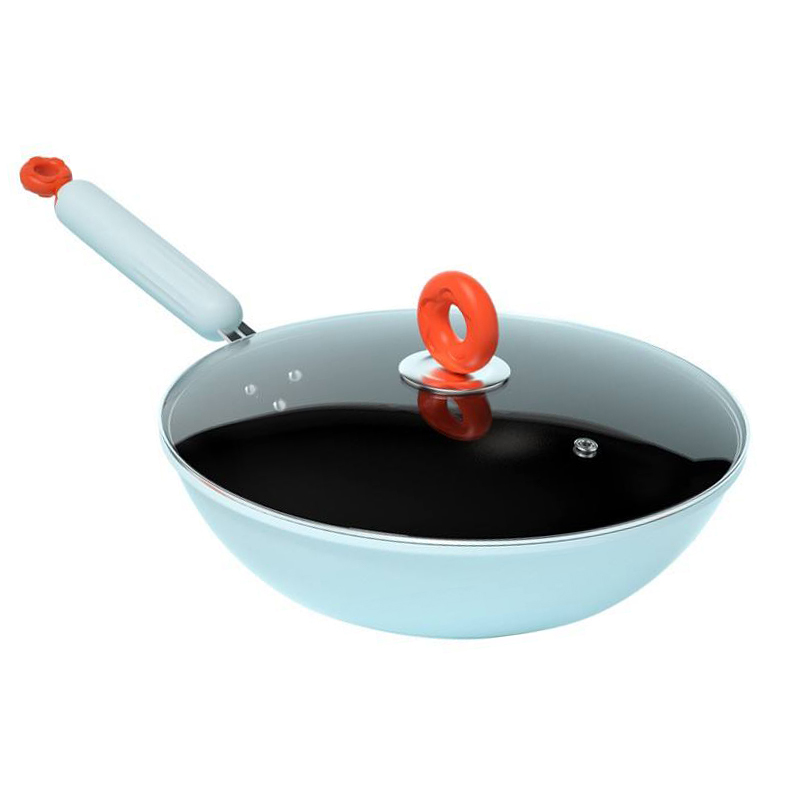
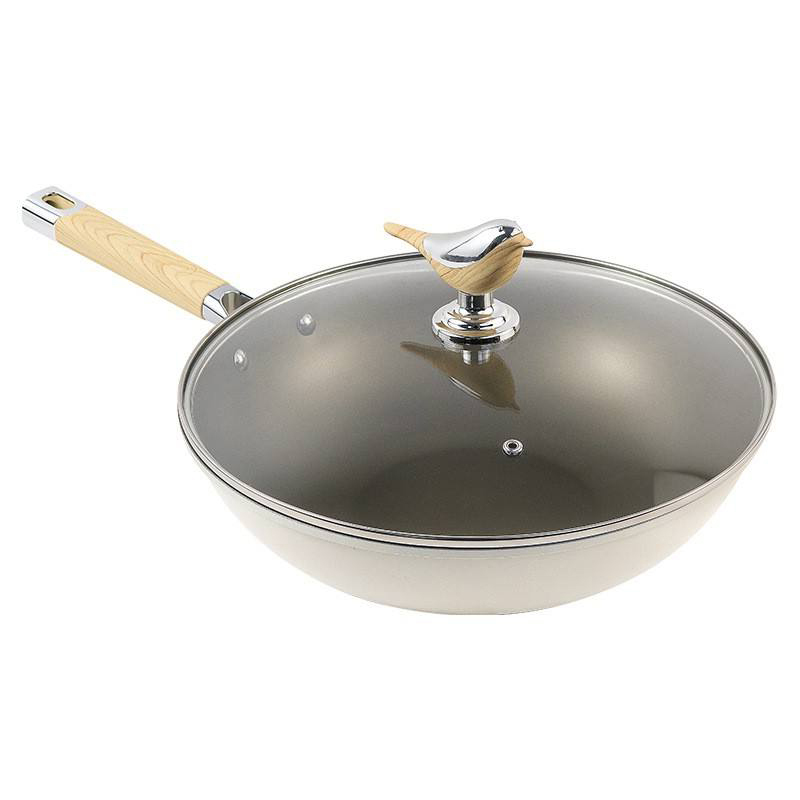
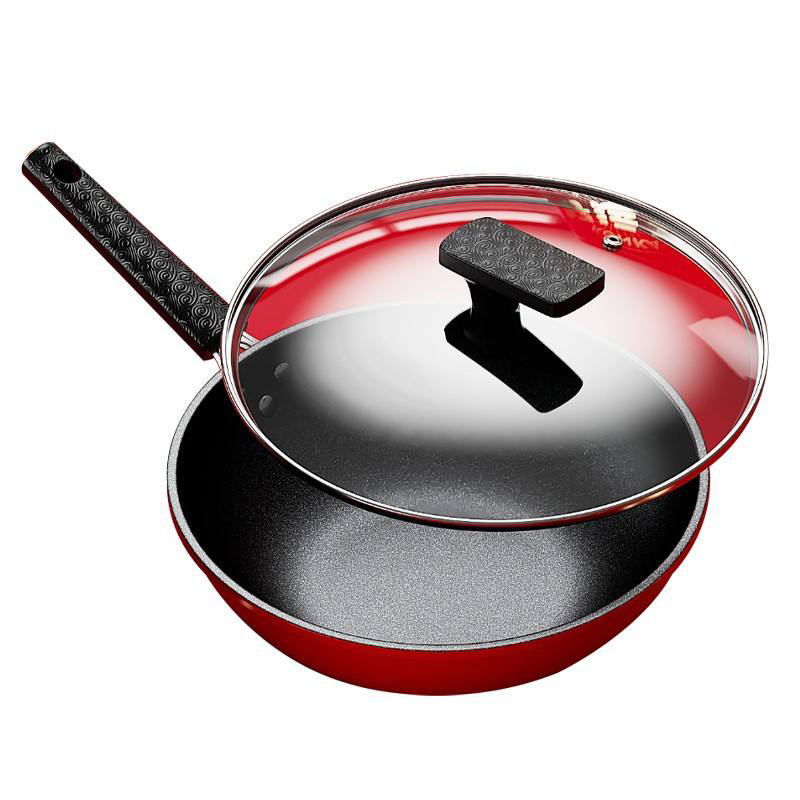
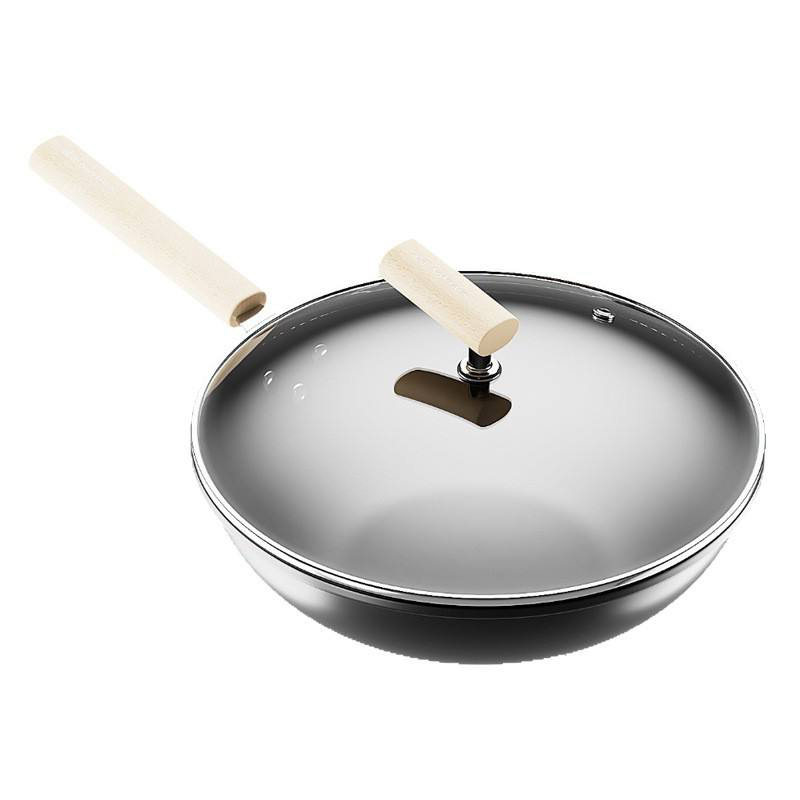
A pan with a glass lid, for instance, introduces an extra consideration. Glass and metal expand and contract at different rates when exposed to sustained heat, so checking whether the lid itself is dishwasher rated separately from the pan body is worth a quick look before assuming the whole set can go in together.
For anyone leaning toward hand washing as the regular method, the routine itself doesn't take much longer than loading a dishwasher rack, especially once it becomes a habit.
This routine takes roughly the same amount of time as rinsing a pan before placing it in a dishwasher rack, minus the wait for a full cycle to finish. For a single pan used daily, hand washing often ends up being the more practical choice simply because it doesn't require running an entire dishwasher load for one item.
If a stainless steel nonstick frying pan has been going through regular dishwasher cycles, a few signs tend to show up before the coating fails completely.
Catching these signs early gives a chance to switch to hand washing before the coating wears down further. Once significant wear sets in, though, it usually reflects the natural end of that particular coating's lifespan rather than something reversible through a change in cleaning method.
Whether a stainless steel nonstick frying pan should go in the dishwasher really comes down to how often it happens and how much the coating's longevity matters for the specific situation. An occasional cycle during a hectic week isn't likely to cause much harm. Making it the default method, meal after meal, tends to shorten how long the nonstick surface performs the way it did when new.
For anyone weighing convenience against coating longevity, hand washing remains the more reliable option for daily use, with the dishwasher kept as an occasional backup rather than the main routine. A Stainless Steel Nonstick Frying Pan tends to hold its cooking performance longest when cleaning habits stay consistent, regardless of which method ends up being the regular choice at the sink.
Recommended Products


NEWDREAM: +86 13646697735
HUANGXUKITCHENWARE: +86 19557954954


Donggao Fenghuangshan Industrial Zone, Tongqin Town, Wuyi County, Jinhua City, Zhejiang Province, China
Copyright © Wuyi Huangxu Industry & Trade Co., Ltd. All Rights Reserved.
Cookware Factory

 English
 русский
 日本語
日本語 Español
 Deutsch