Inquiry
2026-09-18
The cookware used for preparing food can affect more than cooking temperature and texture. The surface that comes into contact with food also matters, especially when meals contain acidic ingredients or remain in the pan for a longer period.
In general, cookware made without added chemical coatings, such as pure ceramic, stainless steel, and properly maintained cast iron, does not normally give food a noticeable change in taste when used appropriately. The situation can be different when reactive metals come into contact with certain ingredients under unsuitable conditions.
Food flavor comes from many sources. Ingredients, seasonings, cooking temperature, cooking time, and the condition of the cookware can all contribute to the final result. Looking at the interaction between food and the cooking surface makes it easier to separate a change caused by the cookware from one caused by the cooking process itself.
Pure ceramic is generally non reactive with common foods. Stainless steel is also widely used because its surface has good resistance to reactions with food. Properly maintained cast iron and carbon steel can also be used for regular cooking without noticeably changing flavor in many situations.
Cast iron and carbon steel are different from pure ceramic and stainless steel in how their exposed metal surface can interact with food. Acidic ingredients can make that interaction more noticeable, particularly when the cookware is poorly maintained or the food remains in contact with the surface for an extended period.
A metallic taste may therefore have several possible causes. The cookware itself may contribute, yet cooking conditions and food residue can also play a role.
For example, a tomato-based dish may taste different after long contact with an exposed reactive metal surface. The same ingredient prepared in a stable cooking surface may retain a more familiar flavor. That does not mean every use of cast iron or carbon steel creates a metallic taste. Surface condition and cooking practice matter.
The practical question is not simply whether a material is described as chemical-free or non-toxic. It is also whether the cooking surface is suitable for the food being prepared and whether the cookware has been properly maintained.
Food naturally contains acids, salts, oils, moisture, and other compounds. When these ingredients come into contact with a cooking surface, the surface needs to remain stable enough for the food's original flavor to remain recognizable.
Pure ceramic is one example of a surface that does not readily react with ordinary ingredients. Stainless steel has a similar role in everyday cooking. When used correctly, these surfaces do not normally contribute a noticeable metallic flavor to the food.
The difference can be easier to notice with foods that have a mild or delicate taste. A strong seasoning may hide a slight change in flavor, while a lightly seasoned dish can make unusual tastes more apparent.
Several conditions influence the interaction:
For Non Chemical Cookware, the useful distinction is between a stable cooking surface and a reactive one. The absence of added chemical coatings does not automatically mean every material behaves in exactly the same way.
This distinction also helps explain why two cookware pieces made from different materials can produce slightly different cooking experiences even when the same recipe is followed.
Pure ceramic is generally valued for its stable contact with food. When the cooking surface consists of inorganic ceramic material without an added reactive coating, common ingredients do not readily interact with the surface.
That characteristic is useful when preparing foods where the natural flavor is meant to remain clear. Tomato-based dishes, fruit-based recipes, vegetables, grains, and lightly seasoned foods can all be prepared without expecting the cooking surface itself to add a metallic taste.
The flavor of the finished food still depends on the cooking process. Ceramic cookware can influence heat distribution and cooking speed according to its design, so food may develop different levels of browning or moisture loss compared with food prepared in another type of pan. Those changes come from cooking conditions rather than the ceramic surface adding a distinct flavor.
Care also matters. Cracked or damaged cookware should not be treated in the same way as an intact cooking surface. Food residue should be removed after use, and the cookware should be cleaned according to its construction.
Pure ceramic is particularly useful when the aim is to keep the cooking surface from becoming an active part of the flavor profile. The ingredients, seasonings, and cooking method remain the main factors shaping the finished taste.
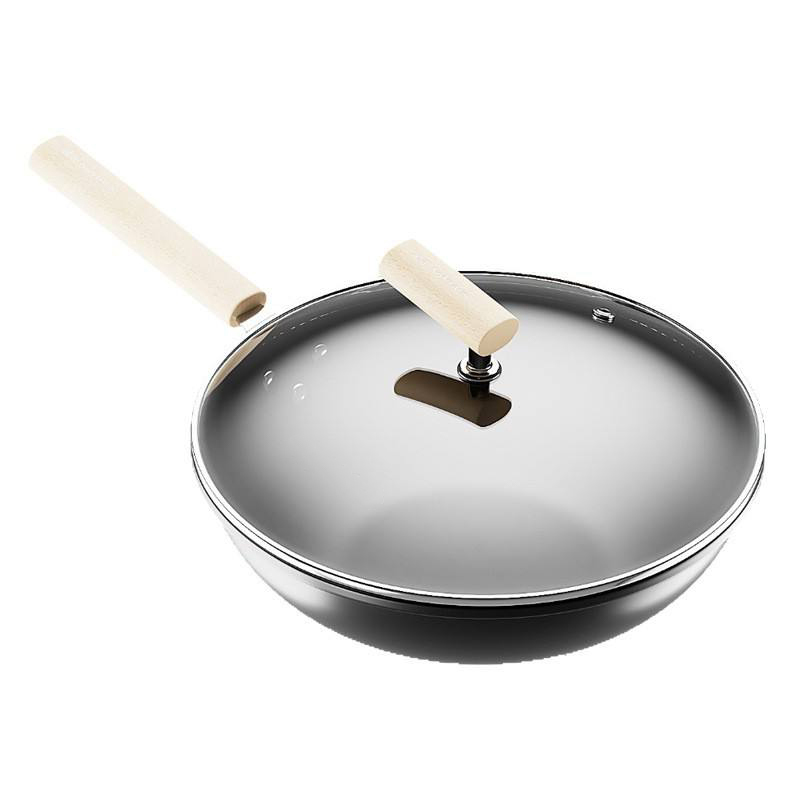
Stainless steel is commonly used for cooking because its surface is resistant to interaction with many foods. Under normal cooking conditions, it does not usually give food a metallic taste.
That can be helpful when preparing acidic ingredients. Tomato sauce, citrus-based recipes, and other foods with noticeable acidity can be cooked in stainless steel without the same type of metal interaction associated with exposed cast iron or carbon steel.
The condition of the cookware still matters. Burned food, old oil, or seasoning residue left on the surface can affect the smell and taste of a later dish. In such cases, the problem may come from residue rather than the stainless steel itself.
Heat control also remains important. Food that sticks to an overheated surface can develop a strong browned or burnt flavor. That change should not be confused with a reaction between the cookware material and the ingredients.
A useful way to look at stainless steel is through the relationship between surface stability and cooking conditions:
| Cooking Factor | Possible Effect on Food Taste |
|---|---|
| Stable stainless steel surface | Little noticeable effect from the cookware itself |
| Acidic ingredients | Generally suitable under normal cooking conditions |
| Burned food residue | May add unwanted smell or flavor |
| Excessive heating | Can change the flavor through browning or burning |
| Poor cleaning | Previous food residue may affect a later dish |
Cast iron needs a different discussion because it is a reactive metal. Properly maintained cast iron can be used for many types of cooking without creating an obvious change in flavor. The surface condition plays an important role in that experience.
Acidic foods deserve more attention. Ingredients such as tomato sauce and citrus fruits can react with exposed iron, particularly when the cookware has not been properly maintained. Under those conditions, food may develop a noticeable metallic taste.
The effect is not limited to one specific recipe. The acidity of the food, the condition of the cooking surface, the cooking time, and the amount of direct contact can all influence the result.
A well-maintained cast iron surface provides a different cooking environment from bare, poorly maintained metal. Regular care helps create a more stable surface for everyday use and reduces direct exposure of food to reactive areas.
Cast iron can therefore be practical for many dishes, while acidic recipes call for greater attention to the condition of the surface. The key issue is not that cast iron always changes food flavor. Rather, its reactive nature means that certain combinations of food and cookware condition can produce a noticeable difference.
Carbon steel is a reactive metal, much like cast iron. A properly maintained surface can be used for everyday cooking without giving food a noticeable metallic taste. Acidic ingredients need more care because they can react with exposed metal.
Tomatoes, citrus fruits, vinegar-based foods, and similar ingredients can be more noticeable in this situation. Long cooking times also give food more contact with the cooking surface, which may increase the chance of a metallic taste when the surface is poorly maintained.
A quick stir-fry is different from leaving an acidic sauce in the pan for an extended period. Food type, cooking time, and surface condition all play a role.
Regular care helps keep carbon steel in a suitable cooking condition. Removing residue, drying the pan after washing, and keeping moisture away from the surface can help prevent unwanted changes.
Cookware condition can affect flavor even when the material itself is suitable for cooking. Old oil, burned food, or spice residue may remain on a surface and affect the next meal.
Cast iron and carbon steel require particular attention because their surfaces change with use. Proper maintenance helps keep exposed metal under control and supports more consistent cooking.
Useful habits include:
Cleaning matters with ceramic and stainless steel as well. Although these surfaces are less reactive, leftover oil or burned food can still create unwanted smells and flavors.
Good maintenance is therefore part of flavor control. The cookware material sets the basic conditions, while daily use determines how those conditions develop over time.
Acidic foods deserve particular attention when using reactive metal cookware. Tomato sauces, citrus-based dishes, and foods containing vinegar can interact differently with exposed metal than foods with little acidity.
Cooking time matters as well. A brief contact period is different from slow cooking in the same pan.
Mildly seasoned food can make unwanted flavors easier to notice. Strong spices and sauces may also leave aromas behind, which can affect a later dish.
| Food Characteristic | What to Consider |
|---|---|
| Acidic ingredients | Take care with reactive metal surfaces |
| Long cooking time | Longer contact may increase interaction |
| Mild seasoning | Unwanted flavors may be easier to notice |
| Strong spices or oils | Residue can affect later meals |
| Moist foods | Surface condition matters during extended cooking |
Cookware material is only one part of the flavor equation. Heat, cooking time, moisture, and food preparation can change the final taste even when the cooking surface remains stable.
Excessive heat can create burnt or bitter flavors. Oil can also develop a strong smell when overheated. Such changes can occur with ceramic, stainless steel, cast iron, or carbon steel.
Uneven heating may create another issue. One area of the food can become heavily browned while another remains less cooked. The resulting flavor difference may appear to come from the cookware when the cooking conditions are actually responsible.
When an unexpected flavor appears, several points are worth checking:
These details can help separate a material-related flavor change from an ordinary cooking effect.
Different cooking habits call for different surface characteristics. Pure ceramic offers a stable cooking surface, while stainless steel is suitable for a broad range of foods, including acidic ingredients.
Cast iron and carbon steel can also work well for everyday cooking when properly maintained. Acidic foods require more attention because exposed reactive metal can interact with the ingredients.
A simple way to compare the materials is:
Non Chemical Cookware covers materials with different surface behaviors, so the material name alone does not determine how food will taste. Food type, contact time, surface condition, heat, and cleaning habits all have a role.
When the cookware suits the food and remains in good condition, the ingredients and cooking method remain the main factors shaping the finished flavor.
Recommended Products


NEWDREAM: +86 13646697735
HUANGXUKITCHENWARE: +86 19557954954


Donggao Fenghuangshan Industrial Zone, Tongqin Town, Wuyi County, Jinhua City, Zhejiang Province, China
Copyright © Wuyi Huangxu Industry & Trade Co., Ltd. All Rights Reserved.
Cookware Factory

 English
 русский
 日本語
日本語 Español
 Deutsch