Inquiry
2026-11-06
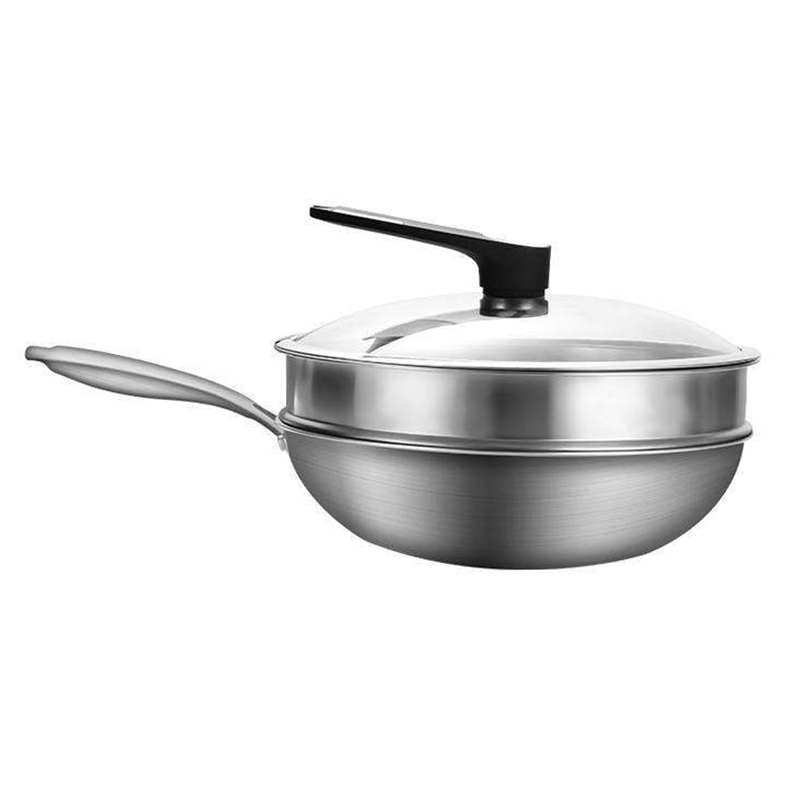
A Stainless Steel Pan for Frying has no coating to release food, so the condition of the metal at the moment ingredients go in determines the result. Eggs, fish, and lean meat bond to a surface that is too cool or too wet. The same pan produces clean release and good browning once heat, moisture, and oil are managed in the right order.
Sticking is a technique issue more often than an equipment fault. Small adjustments to preparation and heating habits change how the pan behaves from one meal to the next.
Proteins in eggs, fish, and meat grip bare metal when the surface has not reached a suitable temperature. As a browned crust forms, the same food usually loosens by itself. A chicken thigh that refuses to move after thirty seconds often lifts easily a minute or two later, which is why early prodding tears the surface.
Moisture is the second cause. Water on an ingredient turns to steam, which blocks browning and keeps the food pressed against the metal. Uneven heating adds to this. One side of a steak may sear while the other stays pale and attached.
Preparation before the pan goes on the burner helps:
Fridge-cold meat dropped into a warm pan also lowers the surface temperature quickly. A short rest on the counter reduces that effect and makes the cooking more even.
Gradual heat works better than a rush. A pan with a layered base spreads warmth differently from a thin, light one, so a dial position that suits one pan can scorch another. Gas flames, electric coils, and induction plates also behave differently, which means settings copied from a friend's kitchen rarely transfer exactly.
Do not leave an empty pan heating while attending to other tasks. Long dry heating can discolor stainless steel and stress the cookware, and a distracted minute is enough to cause it.
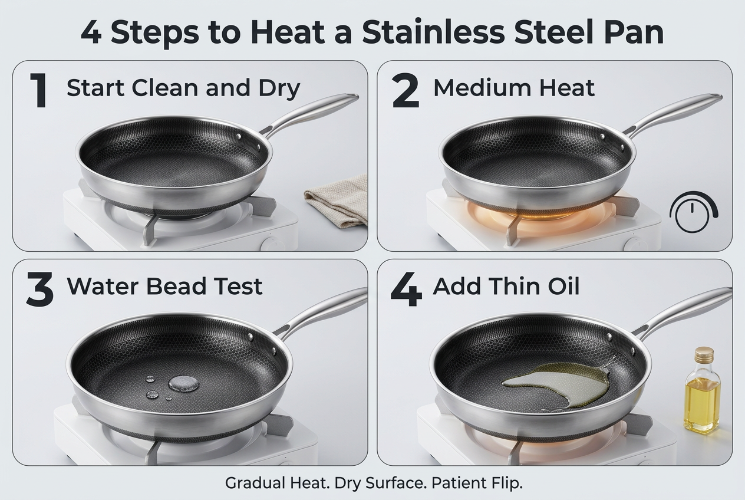
Sprinkle a few drops of water onto the heated surface and watch how they move. A timer cannot account for the stove, the pan, or the room, but a droplet reacts to the real surface under it.
| Water Behavior | What It May Indicate | What to Do |
|---|---|---|
| Spreads out and sizzles | Pan needs more heating | Wait and test again |
| Evaporates almost at once | Surface may be quite warm | Lower the heat slightly and reassess |
| Gathers into a moving bead | Surface is ready | Wipe away the water and add oil |
| Sits still without reaction | Heating is insufficient | Allow more time |
A bead glides because a thin vapor layer forms under the droplet and keeps it from spreading. The test is a visual guide, not a thermometer, and results vary with the pan.
A few precautions apply. Use only a small amount of water. Never add water to a pan that already holds hot oil. Dry the surface fully before adding fat, since leftover water spits when oil goes in. If the pan seems overheated, turn the burner down and let the metal settle before continuing.
Adding oil after preheating keeps water and oil apart and places the fat on a surface that is already ready. Pour a thin layer, tilt the pan to spread it, and wait until it moves easily across the base. A faint shimmer is normal. Heavy smoke means the pan is too hot, so lower the burner before adding food.
Oil choice depends on cooking temperature and flavor.
| Cooking Oil | General Characteristics | Suitable Uses |
|---|---|---|
| Canola oil | Mild flavor, versatile | Eggs, chicken, vegetables |
| Refined avocado oil | Handles higher heat | Steak, seared vegetables |
| Sunflower oil | Light flavor | Fish, everyday frying |
| Olive oil | Distinct flavor | Vegetables, moderate heat |
A thin, even coating covers most jobs. Delicate foods may need slightly more. Butter adds flavor to eggs but browns quickly, so it suits lower heat.
Each ingredient reacts to heat differently, so the method shifts with the food.
Egg proteins set quickly. Lower the heat just before the eggs go in, add butter or oil, and pour them into the pan. Let the whites firm up before moving anything. A thin spatula slides under cleanly once the edges release.
A common mistake is stirring or nudging eggs right away. Patience for the first minute makes turning much easier.
Dry the surface, season, and lay the meat onto the oiled, heated pan. Leave it alone until a brown crust forms. If it resists a gentle nudge, it needs more time.
Pulling hard tears the surface and leaves a stuck layer behind, which then burns and makes the next piece stick as well.
Dry the fillet well, use enough oil, and lower the fish gently into the pan, skin side down if it has skin. Keep the heat moderate and avoid pressing or lifting.
A thin, flexible spatula supports the fillet when it is time to turn. Fish that releases naturally is ready to flip, while fish that clings needs a little longer.
Vegetables release water as they heat, and a crowded pan traps it as steam. Cut pieces to similar size and cook in batches so they touch the metal and pick up light browning.
Mushrooms and zucchini are good examples. Piled together, they turn soft and pale. Spread in a single layer, they brown at the edges.
Some habits make sticking more likely, even with a well-made pan.
Check edges gently with a spatula rather than forcing food off the surface.
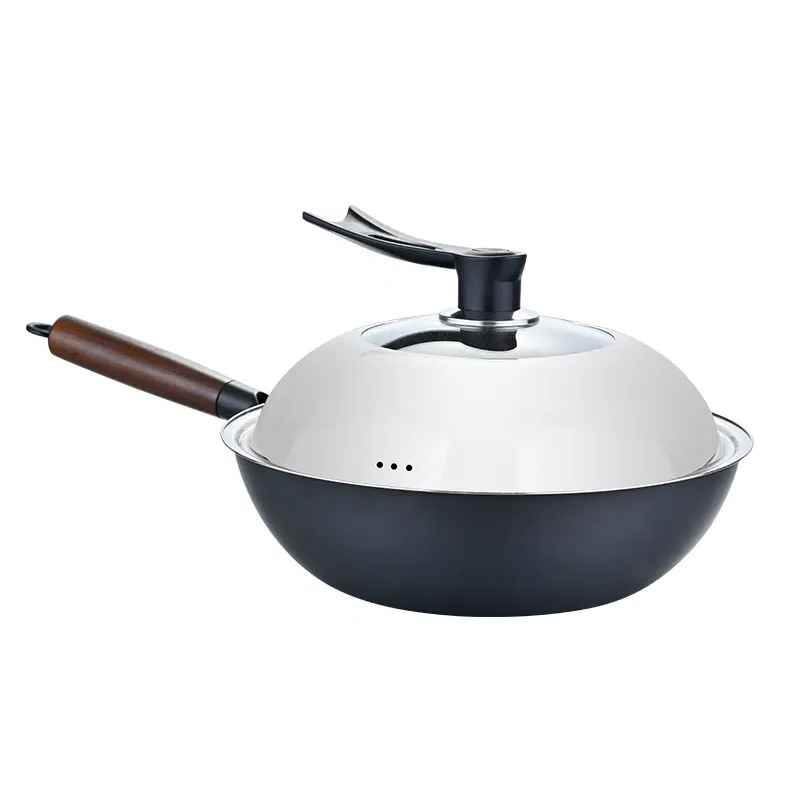
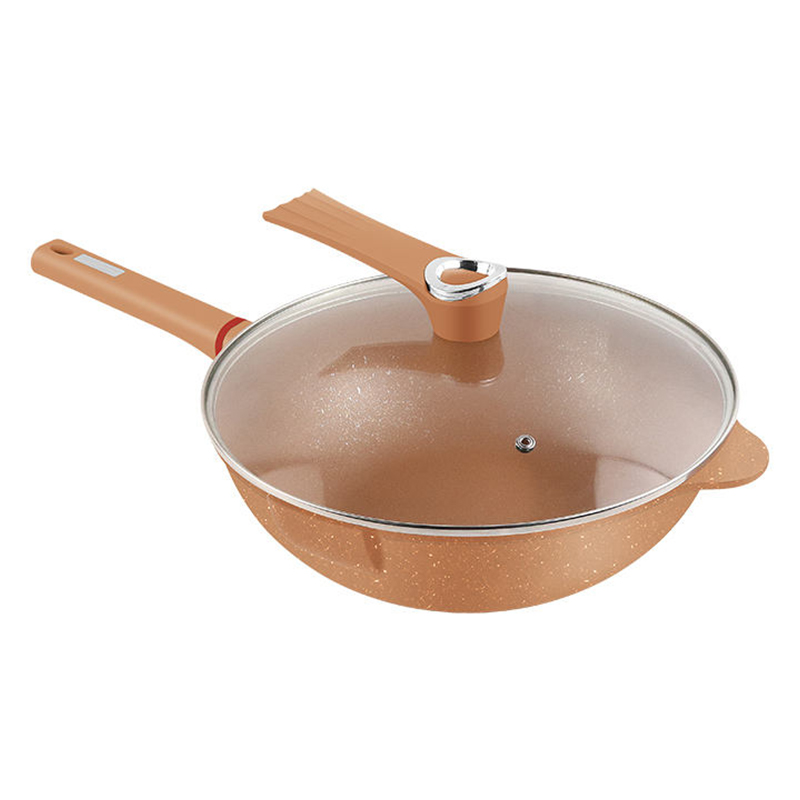
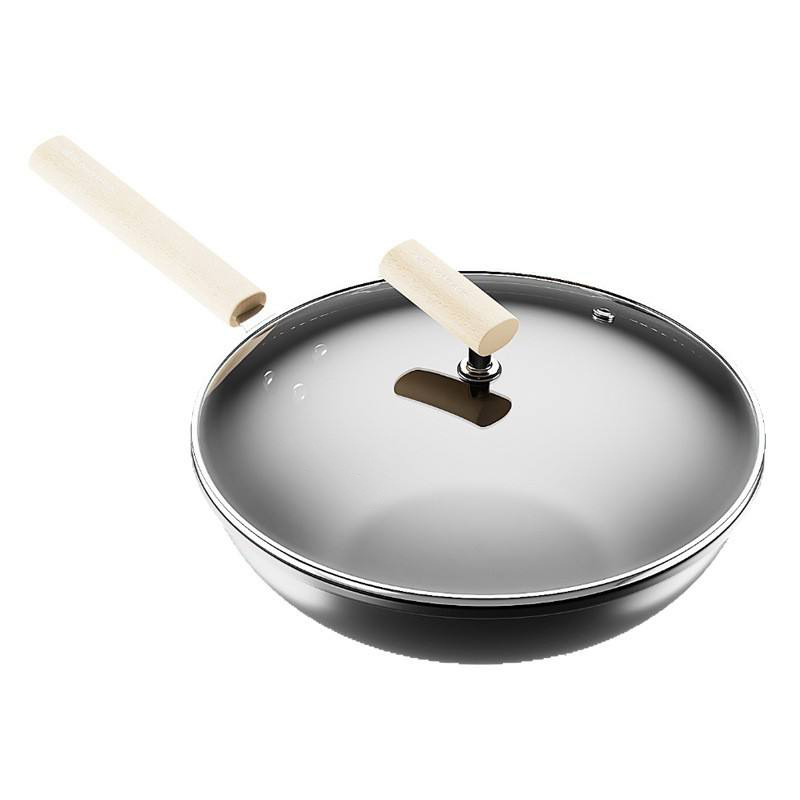
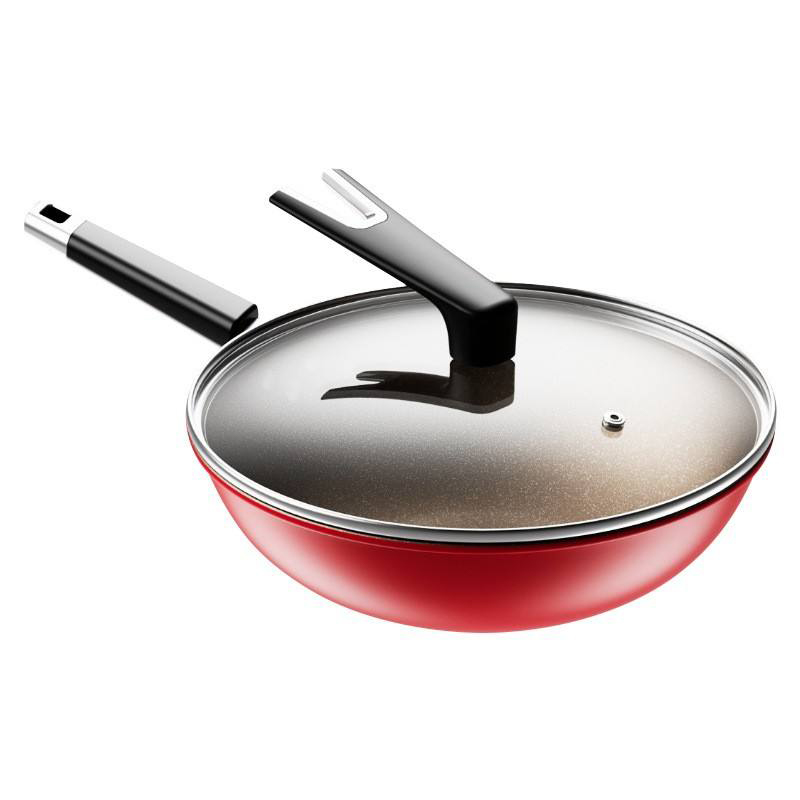
Technique matters, and so does the pan. Many stainless pans use layered construction with an aluminum or copper core to spread heat more evenly. Check that the base suits your cooktop, especially for induction, and that the handle feels secure and comfortable when tilting.
| Pan Size | Common Use |
|---|---|
| Small | Eggs, single portions, side dishes |
| Medium | Chicken pieces, vegetables, daily meals |
| Large | Steak, fish fillets, family portions |
A pan that is too small crowds the food. An oversized one takes more oil and storage space.
For cleaning, let the pan cool first, since sudden temperature changes stress the metal. Wash with warm water, mild detergent, and a soft sponge, then dry with a cloth to limit water spots. Soak stuck-on residue in warm water instead of scraping with harsh tools, which can scratch the surface.
Our team provides guidance on matching pan construction and size to household cooking habits. Product details for the Stainless Steel Pan for Frying range are available through our collection page, and inquiries about base type, cooktop compatibility, and care can be directed to our support team.
Recommended Products


NEWDREAM: +86 13646697735
HUANGXUKITCHENWARE: +86 19557954954


Donggao Fenghuangshan Industrial Zone, Tongqin Town, Wuyi County, Jinhua City, Zhejiang Province, China
Copyright © Wuyi Huangxu Industry & Trade Co., Ltd. All Rights Reserved.
Cookware Factory

 English
 русский
 日本語
 Español
 Deutsch