Inquiry
2026-03-25
Cooking a perfect steak requires intense, sustained heat that most ordinary pans cannot deliver. A dedicated steak frying pan addresses this through specific design features that create the ideal environment for developing that coveted crust while maintaining juicy interior doneness. The science behind steak preparation involves the Maillard reaction, a complex chemical process where amino acids and reducing sugars interact at high temperatures to create hundreds of flavor compounds and that characteristic brown crust. Pans optimized for this purpose must achieve and maintain surface temperatures significantly higher than those used for everyday cooking.
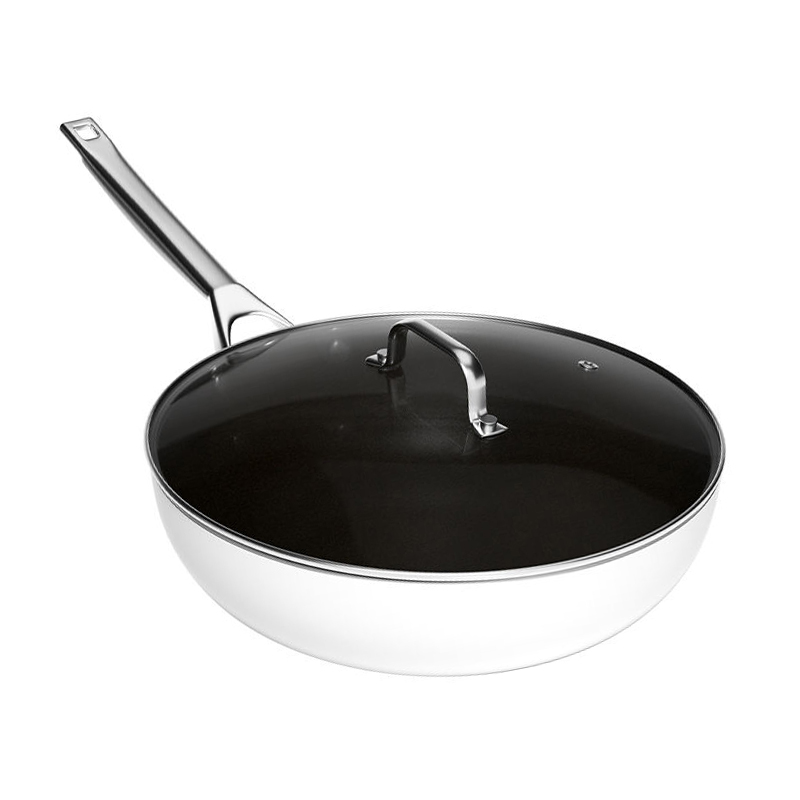
The metal composition of any steak frying pan fundamentally determines its ability to deliver proper searing. Cast iron remains the traditional favorite due to exceptional heat retention properties. Once properly preheated, a cast iron pan holds thermal energy that transfers immediately to steak surfaces upon contact, creating rapid browning without overcooking interior portions. The material's thickness, typically ranging from three to six millimeters, provides sufficient thermal mass to resist temperature drop when cold meat touches hot surface.
Carbon steel offers similar performance with lighter weight and faster response to heat adjustments. Professional chefs often prefer carbon steel for its combination of searing capability and maneuverability during cooking. Stainless steel with aluminum or copper cores provides corrosion resistance with excellent heat distribution, though achieving true non-stick performance requires proper preheating and oil application techniques.
Several design elements distinguish a quality steak frying pan from general-purpose cookware:
Adequate space between multiple steaks prevents overcrowding that releases moisture and lowers pan temperature. Steam generated from crowded steaks creates humid conditions that inhibit browning. Proper pan sizing allows at least two centimeters clearance between pieces for steam escape and consistent crust formation.
Low, gently sloping sides facilitate flipping and turning while allowing moisture evaporation rather than trapping steam. Excessively high walls create humid microclimates that interfere with proper browning.
Oven-safe handles prove essential for techniques requiring finishing steaks under the broiler or in hot ovens. Stainless steel or cast iron handles withstand extreme temperatures without damage, while ergonomic shapes provide secure gripping during movement.
Proper use of any steak frying pan begins with correct preheating methodology. The pan should heat gradually over medium flame for several minutes, allowing thermal energy to distribute evenly throughout the mass. Insufficient preheating results in pale, steamed surfaces rather than proper browning. Overheating to the point of smoking indicates temperatures exceeding optimal ranges, potentially creating bitter flavors.
Experienced cooks test readiness by sprinkling water droplets on the surface. Properly heated pans cause droplets to dance and skitter rather than immediately evaporating or remaining static. This Leidenfrost effect indicates surface temperature in the optimal range for steak searing.
The cooking medium significantly affects results achieved with any steak frying pan. Oils with high smoke points, including avocado, grapeseed, or clarified butter, withstand searing temperatures without breaking down into harmful compounds or creating off-flavors. Extra virgin olive oil and butter alone burn at temperatures required for proper crust formation.
A thin oil layer should coat the pan surface before steak addition. Excess oil causes splattering and can lead to greasy results, while insufficient oil promotes sticking and uneven browning. Some cooks apply oil directly to steak surfaces rather than the pan, allowing the meat to carry its own cooking medium.
Room temperature steaks respond better to high-heat cooking than cold meat straight from refrigeration. Allowing steaks to rest outside refrigeration for thirty to sixty minutes reduces temperature differential that can cause uneven cooking and excessive moisture loss.
When the steak frying pan reaches proper temperature, steaks should make contact and remain undisturbed for several minutes. Premature flipping disrupts crust formation, tearing developing surfaces and releasing juices prematurely. Visual cues including browning at edges indicate readiness for turning.
Recommended Products


NEWDREAM: +86 13646697735
HUANGXUKITCHENWARE: +86 19557954954


Donggao Fenghuangshan Industrial Zone, Tongqin Town, Wuyi County, Jinhua City, Zhejiang Province, China
Copyright © Wuyi Huangxu Industry & Trade Co., Ltd. All Rights Reserved.
Cookware Factory

 English
 русский
 日本語
日本語 Español
 Deutsch