Inquiry
2026-06-05
Home cooking often begins without much planning, yet the moment a pan is placed on heat, the rhythm of the whole process starts to shift according to how that pan behaves under temperature, how it holds oil and ingredients, how steady it stays when moved across the stove. A Kitchen Frying Pan Set ends up becoming something that sits inside daily habits rather than staying as a separate kitchen object, since the way each pan reacts to heat influences timing, movement, and even the type of meals prepared on a regular basis.
When heat spreads unevenly across a surface, cooking usually turns into a process of constant adjustment, ingredients need to be pushed, rotated, or lifted just to avoid overcooked edges or underheated centers, which naturally interrupts the flow of preparation. A more even heat spread reduces those interruptions, letting food sit and develop texture without frequent repositioning, and that changes how attention is distributed during cooking.
Surface behavior has a similar effect, since food that tends to stick forces more oil use or repeated scraping, which interrupts smooth cooking and increases cleaning effort afterward, while a steadier surface allows ingredients to move with less resistance, making timing easier to control. Even something as simple as handle balance changes how long cooking feels, because lighter movement reduces strain when flipping or shaking ingredients, while heavier structure keeps the pan steady but requires more controlled handling.
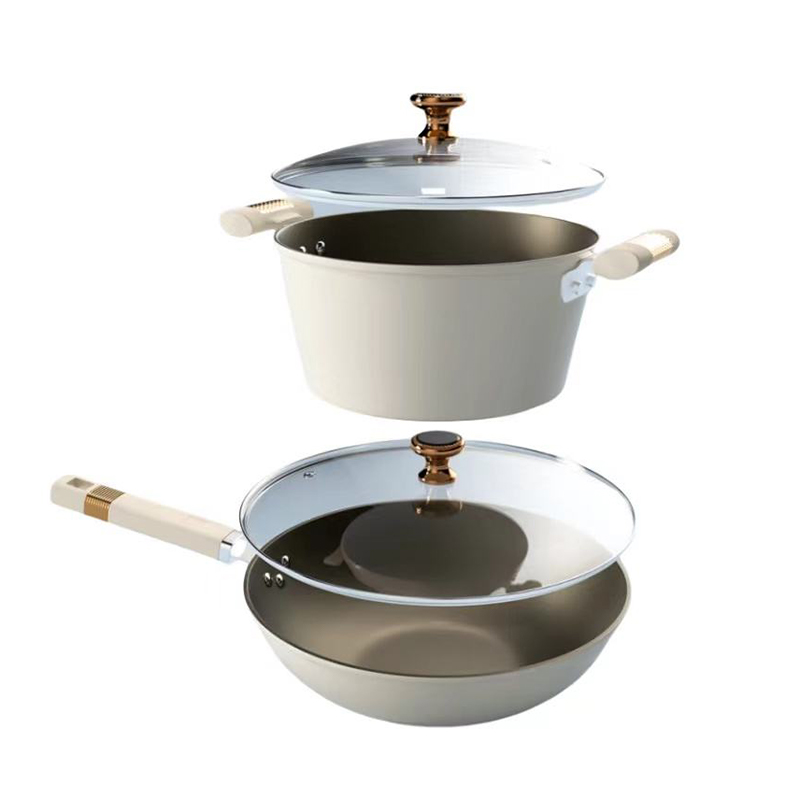
A Kitchen Frying Pan Set is often built around variation rather than repetition, meaning each pan is shaped to handle a different cooking load instead of forcing one tool to manage every situation. In daily kitchens, that difference becomes visible through portion size, ingredient type, and cooking style, since no single pan naturally fits all conditions without compromise.
Smaller pans usually stay close to quick preparation tasks, where heat comes fast and ingredients are limited in volume, such as early meals or light frying. Medium pans take on everyday cooking routines, where balance between space and control matters more than speed alone. Larger pans enter use when multiple ingredients are prepared together, where spacing becomes important to avoid overcrowding, and deeper pans appear in situations involving mixed cooking methods where liquid and solid ingredients share the same surface.
| Pan Type | Daily Cooking Situation | Functional Focus |
|---|---|---|
| Small pan | Fast meals with limited ingredients | Quick heat response and control |
| Medium pan | Regular home cooking routines | Balanced space and stability |
| Large pan | Shared meals or multiple portions | Wider cooking surface |
| Deep pan | Mixed cooking styles | Containment and versatility |
Instead of adapting cooking behavior to one fixed tool, a set allows movement between pans based on what is being prepared, which gradually reduces pressure on any single item and keeps kitchen workflow more flexible across different moments of the day.
Material inside a frying pan does more than hold heat, it shapes how food reacts once it touches the surface, how quickly it starts to change texture, and how easily it moves during stirring or flipping. A Kitchen Frying Pan Set may include different surface behaviors depending on internal material structure, and those differences become noticeable during routine cooking rather than in theory.
Some surfaces respond quickly to heat changes, which supports fast cooking styles where timing matters more tightly, while other surfaces distribute heat more evenly, creating a steadier base for ingredients that require controlled heating. When heat spreads evenly, food tends to cook at a more predictable pace, which reduces the need for constant movement.
Food contact becomes more noticeable when oil usage enters the process, since surfaces with stronger grip may require more lubrication to prevent sticking, while smoother surfaces allow ingredients to move without resistance. That difference affects not only cooking flow but also cleaning afterward, since residue either loosens easily or stays attached depending on surface behavior.
| Surface Behavior | Heat Response Pattern | Food Movement | Daily Handling |
|---|---|---|---|
| Fast-reacting surface | Quick temperature shifts | Requires active control | Moderate cleaning effort |
| Balanced surface | Even heat spread | Stable ingredient flow | Easier residue removal |
| Smooth coated surface | Controlled heat contact | Reduced sticking tendency | Simpler post-cooking cleaning |
Safety during cooking is often tied to stability rather than complexity, since a surface that changes temperature too quickly demands constant attention, while a more steady surface allows cooking to proceed without frequent correction, leaving more room for focus on ingredient timing and preparation rhythm.
Cooking usually becomes tiring not because of the food itself, more often it comes from small interruptions during the process, such as ingredients clinging to the surface, needing extra oil, or requiring constant scraping to keep things moving. A Kitchen Frying Pan Set with stable non stick behavior reduces those interruptions in a quiet way that only becomes noticeable after repeated use.
Food like eggs, sliced vegetables, or thin pieces of meat tends to reveal surface behavior very clearly. When the surface holds too much grip, movement slows down and timing becomes harder to control, since each step depends on lifting or forcing ingredients away from the pan. When the surface behaves more smoothly, food can be turned or shifted with less resistance, which keeps the cooking rhythm more stable.
Cleaning after cooking follows a similar logic. Residue that separates easily makes washing feel simple and short, while stronger sticking turns cleaning into a longer step that often feels heavier than the cooking itself. Over time, this difference quietly shapes how often cooking is done at home.
Surface condition is not permanent. Repeated strong heat, rough tools, or aggressive cleaning slowly change how smooth the surface feels. Even cookware from the same set can feel slightly different after long use depending on how it is handled.
Heat inside a pan does not stay evenly still. It moves through the base and spreads outward, and depending on the structure underneath, it may gather in certain spots or flow more evenly across the surface. A Kitchen Frying Pan Set with a balanced base helps reduce those uneven areas, which means ingredients cook at a more similar pace without constant adjustment.
When heat is uneven, cooking turns into a process of moving food around again and again, just to avoid one side cooking faster than the other. When heat spreads more evenly, ingredients can stay in place longer, and attention shifts from correction to timing.
Base thickness and structure quietly influence this behavior. A thicker base tends to hold heat longer and release it more steadily, while a thinner one reacts quickly when temperature changes, which may feel more responsive during fast cooking. Neither direction changes cooking itself, only the rhythm in which it happens.
Handle design also connects with this balance. A steady grip makes flipping and stirring less stressful, especially when the pan is full. When weight distribution feels uneven, even simple movement requires more control, which slowly affects cooking comfort during repeated use.
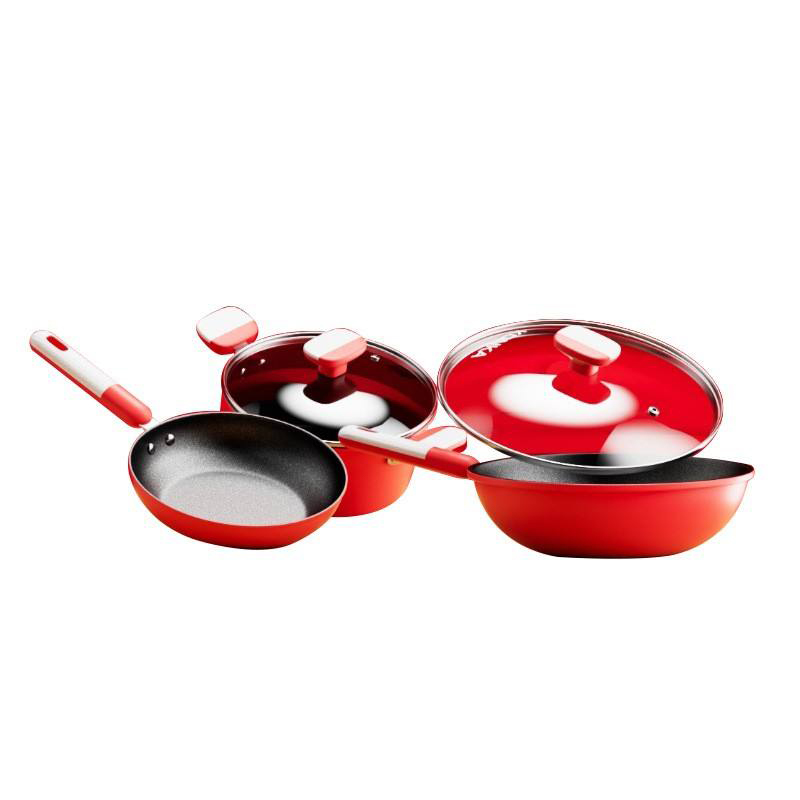
A Kitchen Frying Pan Set does not behave only according to its material on paper. The way it is shaped, coated, and assembled by a Frying Pan Manufacturer influences how it performs in real kitchens over time.
Coating application is one of those hidden factors. When the surface layer is applied evenly, food moves more smoothly across different areas of the pan. When it is inconsistent, certain spots may feel more resistant, which changes cooking flow even if the pan looks identical from the outside.
Base forming affects how heat travels. Slight differences in thickness or layering can change how quickly certain areas warm up. That is why two pans that look the same can still behave differently when placed on heat.
Handle attachment and balance also matter more than they appear. A pan that feels balanced reduces strain during lifting and turning, especially when cooking multiple ingredients at once. Over time, that comfort influences how often it is chosen during daily cooking.
When a full Kitchen Frying Pan Set is made with consistent structure, switching between pans feels natural, without needing to adjust cooking habits each time. That quiet consistency is often what keeps cooking routines stable.
Recommended Products


NEWDREAM: +86 13646697735
HUANGXUKITCHENWARE: +86 19557954954


Donggao Fenghuangshan Industrial Zone, Tongqin Town, Wuyi County, Jinhua City, Zhejiang Province, China
Copyright © Wuyi Huangxu Industry & Trade Co., Ltd. All Rights Reserved.
Cookware Factory

 English
 русский
 日本語
日本語 Español
 Deutsch