Inquiry
2026-01-16
Choosing between a large capacity wok and a standard one significantly impacts kitchen workflow, cooking versatility, and maintenance routines. While both serve essential roles in culinary preparation, their differences in cleaning requirements, practical applications, and material suitability merit close examination.
Cleaning and Maintenance: Practical Considerations
Maintenance routines vary considerably between wok sizes, each presenting distinct advantages and challenges.
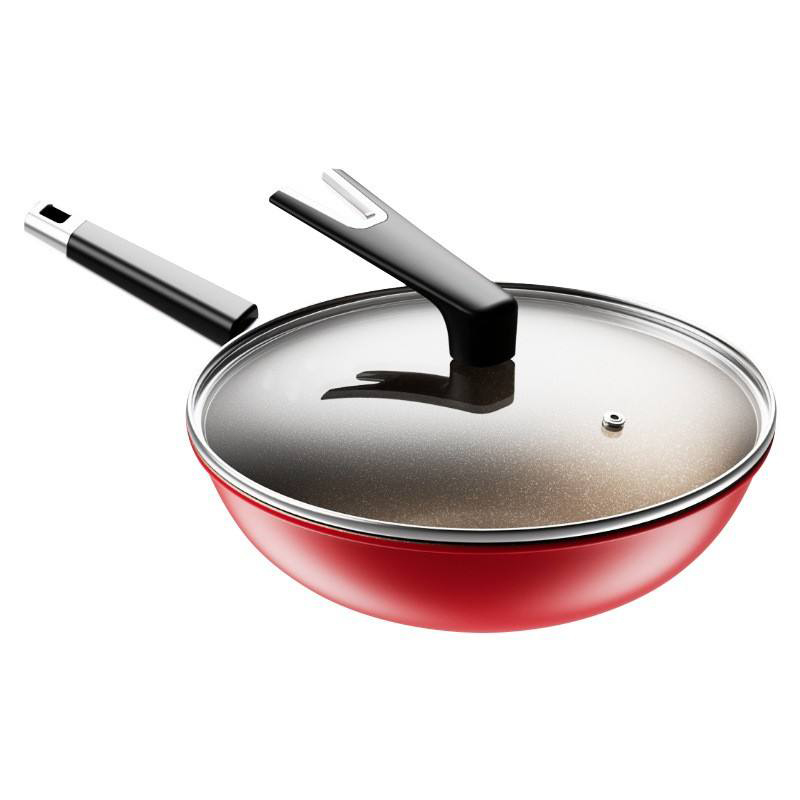
Standard woks, typically measuring 12-14 inches, offer handling convenience for daily use. Their compact dimensions facilitate straightforward cleaning in most kitchen sinks, and they often fit comfortably in dishwashers when material permits. However, their limited depth frequently results in oil splatter and food particles escaping during high-heat cooking, necessitating additional stovetop and counter cleanup.
Large capacity woks (16 inches and above) excel in containment efficiency. Their extended sides effectively minimize splatter dispersion, substantially reducing surrounding surface cleanup. The primary cleaning consideration involves their physical dimensions, which may require alternative washing methods. Many users employ in-place cleaning techniques using hot water and long-handled brushes immediately after cooking, which simultaneously helps maintain the seasoning on uncoated steel or iron surfaces. This method proves particularly advantageous for preserving the patina while ensuring thorough sanitation.
Functional Applications: Versatility Comparison
The cooking applications for each wok type extend beyond basic stir-frying to encompass specialized culinary techniques.
Standard woks provide optimal performance for quick sautéing and small-batch cooking, making them ideal for weekday meals serving 2-4 persons. Their rapid heating response and manageable weight facilitate the tossing motions essential to authentic stir-frying techniques. Capacity limitations become apparent when preparing larger quantities, as overcrowding compromises thermal distribution and textural outcomes.
Large capacity woks unlock expanded culinary possibilities through their generous dimensions. Their design supports specialized cooking methods including:
Material Characteristics and Selection
Material composition critically influences thermal performance, durability, and maintenance requirements across both wok categories.
Carbon Steel remains the professional preference for its optimal balance of weight, thermal responsiveness, and durability. When properly seasoned, it develops superior non-stick properties while withstanding extreme temperatures. This material performs exceptionally in both standard and large configurations, though larger versions may require additional wrist strength during maneuvering.
Cast Iron delivers unparalleled heat retention and distribution, particularly beneficial for sustained cooking methods. Its substantial weight presents ergonomic challenges in larger capacities, and it demands meticulous seasoning maintenance to prevent oxidation. Best reserved for standard-sized woks used primarily for braising and slow frying applications.
Non-Stick Coatings simplify cleaning processes and accommodate dishwasher use in many cases. Their temperature limitations restrict authentic high-heat stir-frying applications, making them better suited to standard woks used for low-temperature cooking or delicate ingredients requiring minimal oil.
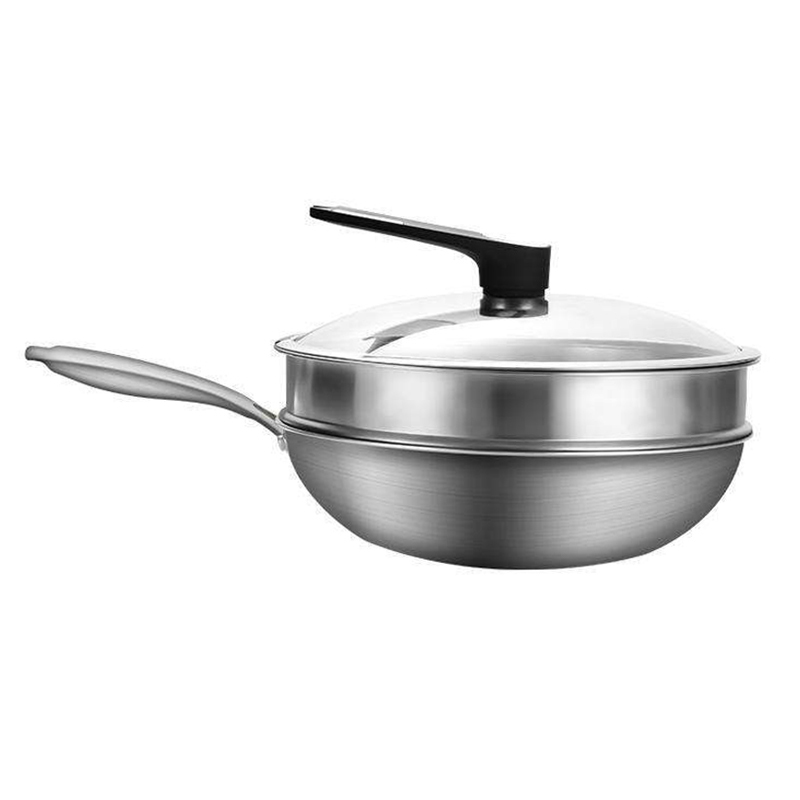
Stainless Steel offers maximum corrosion resistance and structural integrity, often incorporating aluminum or copper cores for improved heat conduction. While less prone to seasoning requirements, it may demonstrate increased food adhesion unless properly preheated. This material provides practical solutions for large woks intended for multi-purpose kitchen use with simplified maintenance protocols.
Conclusion
The selection between large and standard woks ultimately depends on individual cooking patterns, household requirements, and cleaning preferences. Large capacity woks provide distinct advantages in splatter containment, cooking versatility, and volume preparation, while standard woks offer convenience for daily use and space efficiency. Material selection further refines performance characteristics, with carbon steel representing the most versatile option for serious cooks, while stainless steel and coated alternatives provide practical solutions for streamlined kitchen operations.
Recommended Products


NEWDREAM: +86 13646697735
HUANGXUKITCHENWARE: +86 19557954954


Donggao Fenghuangshan Industrial Zone, Tongqin Town, Wuyi County, Jinhua City, Zhejiang Province, China
Copyright © Wuyi Huangxu Industry & Trade Co., Ltd. All Rights Reserved.
Cookware Factory

 English
 русский
 日本語
日本語 Español
 Deutsch