Inquiry
2026-01-30
Stainless steel pots and pans are all over kitchens now. They take hard knocks every day, heat up even, and handle pretty much whatever you cook. Market figures from 2024 show about $8.7 billion in sales, headed toward $12-15 billion soon. Folks just keep choosing pieces that hang around a long time.
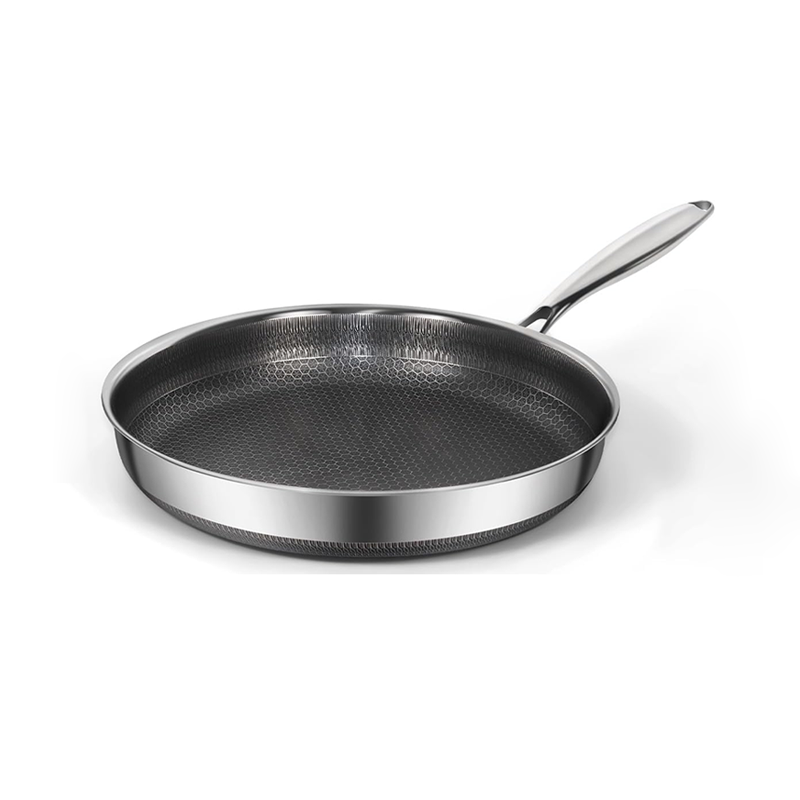
How It Stacks Up Against Non-Stick
Non-stick pans are handy in their own way. Food slips right off with barely any oil—nice for eggs, pancakes, or fish that falls apart easily. You wipe them down in seconds.
Stainless steel plays tougher. No coating means nothing scratches off or wears out quickly. It loves high heat: sear a steak hard, get that crust, then use the brown bits stuck on the bottom for sauce. Non-stick never gives you that kind of flavor.
Sticking happens sometimes on stainless, but it's no big deal. Just heat the pan empty till a drop or two of water skitters across like crazy, add a little oil, and most foods let go fine.
Lots of stainless sets stay in use for twenty, thirty years or more. Non-stick usually starts acting up after a couple of years, especially if you scrape it with metal or cook hot. Stainless goes in a blazing oven, takes metal spoons and forks, and lets you cook all kinds of ways. Non-stick works best for fast, simple stuff.
Health and Safety Stuff
What goes in your food matters. Stainless steel mostly minds its own business. Cook tomato sauce, lemons, vinegar, wine—nothing tastes funny, and hardly any metal ends up in the dish. It's iron with chromium and usually some nickel, building a thin shield that stops rust.
Some non-stick coatings have made people wonder over the years, mainly when they get scratched or way too hot. Stainless skips coatings altogether—just plain metal.
Tests pick up tiny bits of nickel or chromium at first, more if the food's really acidic or cooks forever. But after a few rounds, that drops a lot and stays low, nothing to worry about for regular cooking.
The smooth finish doesn't give germs many places to hide, and it washes easy. Cook with less oil if you want, and the even heat keeps more goodness in vegetables and meat.
Real Daily Use
Stainless fits right into normal cooking days. Boil pasta, simmer soup, fry up veggies, brown meat, start on the stove and finish in the oven—it all works. The pans don't warp much and run fine on induction, gas, old electric coils, or glass tops.
Heat spreads steady, no random hot spots burning things. Meat browns even, onions caramelize right, and sauces thicken smooth.
Cleaning stays simple. Plenty of them go in the dishwasher. Burnt-on stuff usually loosens with hot soapy water and a soft scrub, or a little baking soda helps.
Restaurant folks grab stainless steel because it survives nonstop work and pulls out better flavors. Home cooks like the same steady results for quick weeknight meals or bigger weekend spreads.
Bottom line, stainless steel gives you tough build, straight-up safety, and room to cook however you like. It beats non-stick most days on how long it lasts and what you can do, turning into a kitchen favorite that just keeps going. If you want to know more about these products, please click there.
Recommended Products


NEWDREAM: +86 13646697735
HUANGXUKITCHENWARE: +86 19557954954


Donggao Fenghuangshan Industrial Zone, Tongqin Town, Wuyi County, Jinhua City, Zhejiang Province, China
Copyright © Wuyi Huangxu Industry & Trade Co., Ltd. All Rights Reserved.
Cookware Factory

 English
 русский
 日本語
日本語 Español
 Deutsch