Inquiry
2026-05-15
In many home kitchens, cooking has gradually shifted into something more flexible and less structured. Meals are not always prepared in a fixed order or with a fixed plan. One pan may need to handle breakfast, lunch, and dinner at different moments, depending on how the day unfolds.
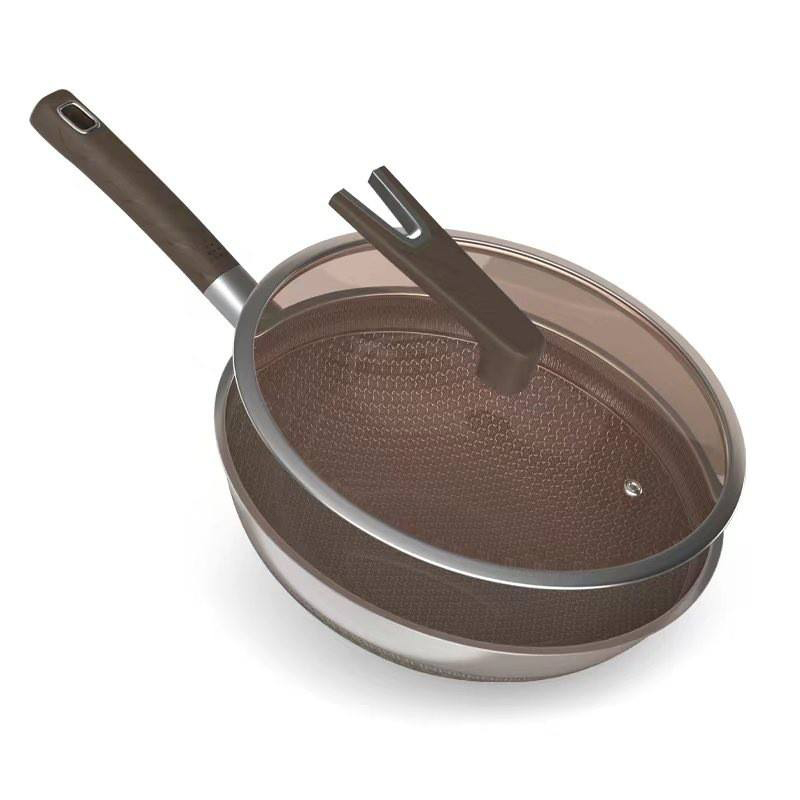
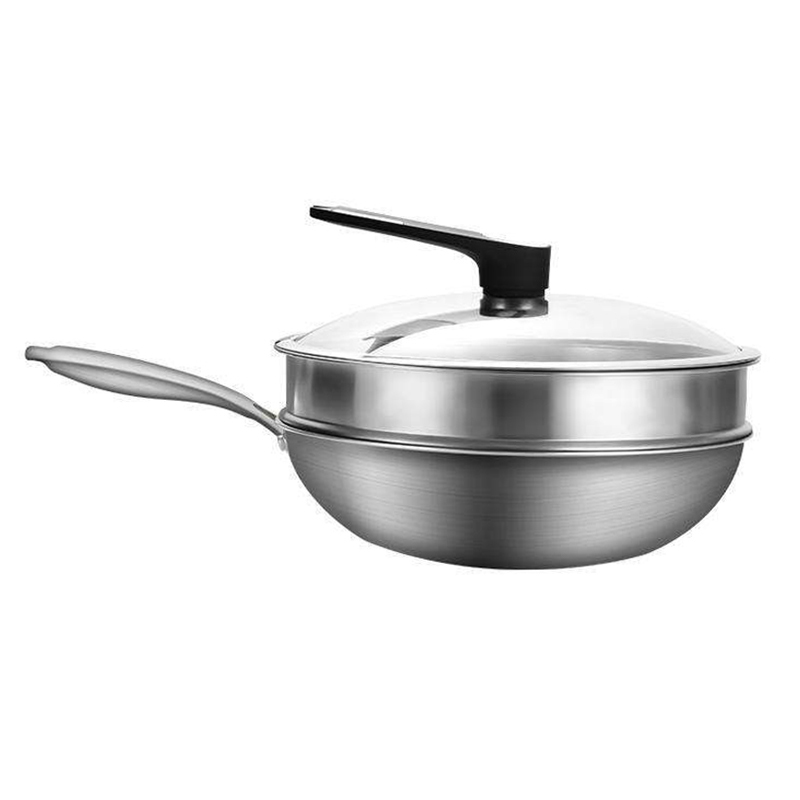
The Stainless Steel Nonstick Frying Pan with Lid tends to fit into this kind of routine because it does not force a single way of cooking. It can handle light frying, quick sautéing, and covered simmering without requiring a change of cookware in between. In a real kitchen, this reduces the number of steps people need to think about while cooking.
The lid changes the rhythm of cooking in a subtle way. When it is placed on the pan, the cooking process becomes more self-contained. Instead of constantly checking or stirring, many people simply adjust the heat and wait a little longer. That small shift often makes cooking feel less interrupted.
In practical use, cookware coming from Wuyi Huangxu Industry & Trade Co., Ltd. is often mentioned by users in relation to stable everyday performance. The feedback usually focuses less on appearance and more on how the pan behaves after repeated use in normal kitchen conditions.
The stainless steel body is not just about strength. In daily cooking, it quietly influences how the pan behaves every time it is heated and cooled. A kitchen is not a controlled environment, so cookware is constantly going through temperature changes.
A stable stainless steel structure helps the pan keep its shape even after many cooking cycles. This matters more than it might seem. When the base stays even, food spreads more naturally across the surface instead of gathering in certain spots. That makes stirring and flipping feel more predictable.
Another thing people notice over time is how the pan feels in the hand. It has a steady weight that makes it easier to control when moving it from stove to counter. It does not feel too light or unstable, which helps when there is food inside and quick adjustments are needed.
In everyday use, these details do not stand out as separate features. They show up quietly as part of the cooking routine, especially when the same pan is used again and again.
Inside the pan, the honeycomb texture plays a more practical role than it might appear to have. Instead of a completely flat surface, there are small raised patterns that slightly change how food touches the coating.
When food is placed on the surface, it does not sit in full contact with every point. This reduces the chance of sticking during longer cooking moments, especially when ingredients are moved around with a spatula or spoon.
In daily cooking, this difference is often noticed in simple situations. For example, when eggs or vegetables are cooked, they tend to move more easily without needing force. It does not change how the food is prepared, but it changes how smooth the movement feels during cooking.
A simple way to understand the surface behavior:
| Surface Type | What Happens During Cooking | How It Feels in Use |
|---|---|---|
| Flat coating surface | Full contact with food | Slight sticking during longer heat |
| Honeycomb texture surface | Partial contact points | Smoother food movement |
| Mixed structure surface | Balanced contact | More controlled handling |
Over time, this structure also helps reduce direct pressure on the coating layer, which supports more stable everyday use.
In many kitchens, people now prefer using less oil during cooking. This changes how cookware behaves, because oil is no longer the main factor preventing food from sticking.
The non-stick coating helps fill that role. When heat is applied, food can move across the surface more easily, even with minimal oil. This is especially noticeable during quick cooking tasks where ingredients are stirred frequently.
In real use, this makes cooking feel less interrupted. Food can be turned or moved without needing to scrape or wait for it to release naturally. It also helps when cooking simple meals that are prepared often, since the process becomes more predictable.
Cleaning after cooking is another part where the coating makes a difference. Instead of scrubbing, many residue can be removed with warm water and a soft wipe. This reduces the effort needed after daily cooking sessions, especially when the pan is used more than once a day.
The tempered glass lid adds a quiet layer of control to daily cooking. Instead of lifting the lid repeatedly, users can simply look through it to see what is happening inside the pan.
This helps keep heat more stable during cooking. When the lid stays in place, heat does not escape as quickly, and the cooking process continues in a more even way. This is useful when preparing dishes that need a bit of time to settle or soften.
In real kitchen situations, this also reduces interruptions. People can focus on other small tasks nearby while still keeping an eye on the cooking progress. It changes cooking from a constant monitoring activity into something that can run more smoothly in the background.
The lid also helps reduce splashes during cooking. When liquids or sauces are heated, the covered space keeps the movement inside the pan more controlled, which helps keep the surrounding area cleaner.
Kitchen equipment changes more often than expected. A pan that only works well on one heating surface tends to get pushed aside once the cooking setup shifts. That is why compatibility matters more in real use than it appears on paper.
The Stainless Steel Nonstick Frying Pan with Lid stays usable across several common stovetop types without requiring any special handling. On gas stoves, heat changes are immediate, so cooking adjustments feel direct. On electric stoves, heat moves more slowly across the base, which makes cooking feel steadier but less reactive.
Induction surfaces behave differently again, since heat is generated through the base itself rather than transferred from outside. Ceramic surfaces spread heat across a flat area, where contact between pan and stove becomes more noticeable.
| Stove Type | How Heat Feels in Use | Practical Kitchen Result |
|---|---|---|
| Gas stove | Direct and responsive | Quick temperature changes |
| Electric stove | Steady heating flow | Stable cooking rhythm |
| Induction surface | Controlled energy transfer | Focused heat behavior |
| Ceramic surface | Even surface heating | Balanced cooking distribution |
Nothing about the cooking method changes, but switching between kitchens does not force a change in cookware habits.
Uneven heating usually does not show up immediately. It becomes noticeable when food starts behaving differently in different parts of the same pan. One side cooks faster, another side lags behind, and the cooking process ends up needing constant adjustment.
The base design of this frying pan helps reduce that gap by spreading heat more evenly across the surface. Heat does not sit in one area for too long, so food tends to cook at a more balanced rate.
Over time, another detail becomes relevant. Some pans slowly lose flatness after repeated heating cycles, which affects how they sit on the stove. A more stable base reduces that shift, so the cooking surface stays more consistent during repeated use.
The handle is one of those parts that only gets attention when it feels uncomfortable.
Heat from the pan naturally travels toward the handle area during cooking. A heat-resistant structure helps slow that transfer, so grip does not become difficult halfway through cooking. This is especially noticeable when cooking takes longer than expected.
Grip stability also matters in small movements. Tilting the pan to pour sauce, shifting ingredients, or lifting it off the stove all depend on how steady the handle feels. If the balance feels off, cooking becomes more cautious and slower.
In daily kitchen routines, these movements repeat constantly. A stable handle removes the need to adjust grip repeatedly, which keeps cooking flow smoother without interruptions.
Cooking at home rarely follows a single method. Even a simple meal can move between frying, stirring, and covered heating without much structure.
For light sautéing, the surface allows food to move without dragging. Ingredients shift smoothly, which helps during quick cooking steps where timing matters. Oil use can stay minimal without making the process difficult.
For frying, the coating and textured surface reduce sticking during repeated movement. Food can be turned without forcing it away from the surface, which keeps the cooking process steady.
When the lid is placed on, the cooking space changes. Heat stays inside longer, and moisture circulates instead of escaping immediately. This makes the pan behave more like a closed cooking environment, useful for softer or slower cooking.
These changes happen within the same pan. Only heat level and lid position change, not the equipment itself.
Cleaning is usually the part that decides whether cookware gets used again the next day. If it feels time-consuming, it often gets avoided.
The interior surface of this frying pan does not hold food tightly after cooking. Many residue loosens with warm water and light wiping. There is less need for scrubbing, which makes cleanup feel more routine than effort-heavy.
Because cooking residue does not cling strongly, the cleaning process stays consistent even after repeated use. That consistency matters in kitchens where cooking happens often.
Dishwasher use also fits into this pattern. Instead of separate cleaning steps, the pan can be handled together with other items, reducing attention needed after cooking.
Some habits slowly change how the pan behaves over time, even if they seem harmless.
Leaving the pan on heat without food or oil is one of them. This creates unnecessary stress on the surface and does not help any cooking process.
Using sharp or hard utensils repeatedly can also leave small marks on the surface layer. While occasional use is normal, constant scraping changes how smooth the surface feels.
The lid is sometimes lifted too often during cooking. That releases heat repeatedly and breaks the stable cooking environment, especially when simmering or slow heating is involved.
Cleaning also plays a role. Rough scrubbing tools remove residue quickly, but they also wear down the surface gradually. Softer cleaning methods tend to keep the surface behavior more stable over time.
In many households, cooking is shared and changes from day to day. One pan may be used for quick meals in the morning and slower dishes later in the day.
This frying pan fits into that kind of rotation without requiring different handling styles. It behaves the same whether cooking is fast or slow, which makes it easier to switch between users.
Over time, it becomes part of routine cooking rather than something reserved for specific dishes. The same grip, the same heating response, and the same cleaning process repeat across different meals.
That repetition is what keeps it practical in daily use. Not complexity, but consistency across different cooking situations.
Recommended Products


NEWDREAM: +86 13646697735
HUANGXUKITCHENWARE: +86 19557954954


Donggao Fenghuangshan Industrial Zone, Tongqin Town, Wuyi County, Jinhua City, Zhejiang Province, China
Copyright © Wuyi Huangxu Industry & Trade Co., Ltd. All Rights Reserved.
Cookware Factory

 English
 русский
 日本語
日本語 Español
 Deutsch