Inquiry
2026-03-13
The release performance of any non-stick kitchen pan depends entirely on the coating chemistry applied during manufacturing. PTFE-based systems remain the industry standard, with polytetrafluoroethylene creating surface energy so low that food cannot establish adhesive bonds during cooking. Modern formulations incorporate ceramic or mineral reinforcing fillers that enhance scratch resistance while maintaining release properties. Ceramic sol-gel coatings offer an alternative approach based on silica chemistry, forming hard surfaces that rely on extreme smoothness rather than low surface energy for release. Chefs appreciate their ability to achieve deep browning before food releases naturally. Silicone-based systems occupy niche applications, particularly bakeware where pans must flex during demolding. Their elastomeric nature accommodates the twisting associated with muffin pans and intricate shapes.
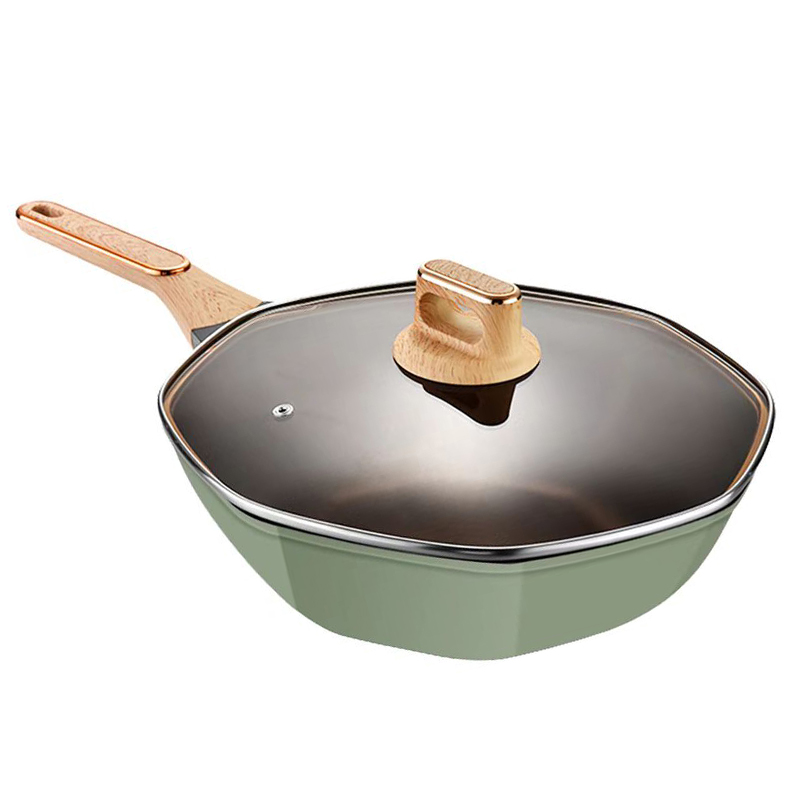
The metal beneath any coating fundamentally determines thermal behavior. Aluminum alloys dominate due to exceptional thermal conductivity that eliminates hot spots causing uneven cooking. Specific alloy grades suit different manufacturing methods, with some formulations optimized for stamped construction while others accommodate die-cast complex geometries. Hard-anodized aluminum undergoes electrochemical treatment creating an oxide layer with surface hardness approaching steel while maintaining most of aluminum's thermal conductivity. Stainless steel appears in clad constructions where an aluminum core provides heat distribution while outer layers contribute durability and induction compatibility. Chromium and nickel content in food-grade stainless steel provides corrosion resistance essential for dishwasher-safe products.
Multi-zone ovens create specific heating profiles essential for proper film formation. Initial low-temperature zones allow solvent evaporation without bubble formation that would create surface defects. Mid-zone temperatures enable polymer flow-out and leveling across the substrate. Higher temperatures drive cross-linking reactions that develop final film properties. Graduated cooling zones prevent thermal shock that could induce stress compromising adhesion. Total oven time varies depending on coating formulation and thickness requirements, with careful control ensuring complete cure without degradation.
Finished cookware must demonstrate specific performance metrics before reaching consumers. A certified non-stick kitchen pan undergoes:
| Test Method | Parameters | Acceptance Criteria |
| Adhesion Testing | Cross-hatch cutter, tape pull | No coating removal at intersections |
| Abrasion Resistance | Rotating wheels, extended cycles | No substrate exposure |
| Release Testing | Standardized food, controlled cooking | Clean release without sticking |
| Thermal Shock | High heat to cold water cycling | No visible degradation |
| Corrosion Resistance | Controlled exposure conditions | No blistering at scribe marks |
Adhesion testing uses a cross-hatch cutter creating multiple squares in the coating before tape application and removal. Clean edges without lifting indicate proper surface preparation and primer selection. Abrasion resistance testing with rotating abrasive wheels under controlled load simulates years of utensil contact in accelerated fashion, with premium coatings achieving extended cycles before substrate exposure. Release verification measures how easily standardized food materials separate after controlled cooking cycles, ensuring consistent performance across production batches. Thermal shock cycling alternates pans between high heat and cold water, revealing coating systems prone to delamination from differential expansion rates. Corrosion exposure evaluates protection by subjecting samples to controlled conditions, verifying that edge coverage adequately protects base metals.
The service life of any non-stick kitchen pan depends heavily on appropriate use and care. Utensil selection should favor wood, silicone, or nylon tools that minimize contact pressure, as metal utensils concentrate force at small points exceeding coating compressive strength. Heat management requires avoiding empty pan heating, which can exceed coating thermal stability limits. Cleaning practices should avoid abrasive pads that mechanically wear coating surfaces, with gentle sponges and mild detergents removing residues without progressive thickness reduction. Storage considerations include protecting coated surfaces from contact with other metal cookware, using protective layers between stacked pans to prevent scratching that compromises both appearance and performance.
Modern kitchen electrification drives specific requirements for induction-compatible cookware. Ferromagnetic materials in base construction respond to magnetic fields generated by induction coils, converting electromagnetic energy directly to heat. Multi-layer constructions incorporate stainless steel with sufficient magnetic permeability while maintaining aluminum cores essential for heat distribution. Base flatness ensures consistent contact with glass cooktop surfaces for efficient energy transfer. A versatile non-stick kitchen pan accommodates multiple cooktop types through thoughtful material engineering, with induction-ready models featuring full-surface magnetic response rather than central discs that create uneven heating patterns.
PTFE production has evolved to eliminate concerning compounds from manufacturing processes entirely, with current polymerization using alternative surfactants that break down readily in the environment. Recycling challenges persist because coated pans cannot enter standard aluminum recycling streams, though some manufacturers now offer take-back programs recovering base metals through controlled processing. Aluminum-based pans reduce cooking energy requirements compared to stainless steel due to superior thermal conductivity, with this operational benefit partially offsetting manufacturing impacts over product lifetime.
Recommended Products


NEWDREAM: +86 13646697735
HUANGXUKITCHENWARE: +86 19557954954


Donggao Fenghuangshan Industrial Zone, Tongqin Town, Wuyi County, Jinhua City, Zhejiang Province, China
Copyright © Wuyi Huangxu Industry & Trade Co., Ltd. All Rights Reserved.
Cookware Factory

 English
 русский
 日本語
日本語 Español
 Deutsch